Eyeglass Case Clover: A Designer’s Real-World Review
As an embroidery designer who has spent years digitizing files and testing them on everything from stiff denim to delicate silk, I approach every new machine embroidery design with a critical eye. It is not enough for a pattern to look pretty on a screen; it must hold up under the needle, survive the hoop, and ultimately satisfy the end user. Recently, I evaluated the Eyeglass Case Clover, a project that promises both utility and charm through the in-the-hoop technique. Here is my honest assessment of how this design performs in a real-world studio setting.
First Impressions and Visual Personality
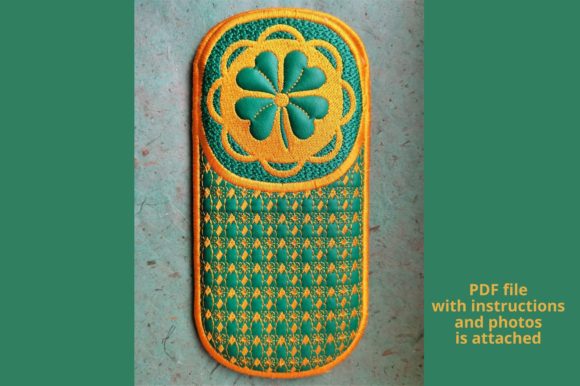
The first thing that strikes you about the Eyeglass Case Clover is its thoughtful integration of form and function. Unlike flat motifs that simply sit on top of fabric, this piece is structural. The clover theme suggests a soft, organic aesthetic, which pairs beautifully with the practical need for eye protection. When I loaded the embroidery file into my software to preview the stitch path, I noticed a balanced layout. The design does not rely solely on dense fill stitch areas, which can sometimes make small accessories feel heavy or stiff. Instead, it appears to use a mix of textures that should allow the finished case to remain flexible enough to open and close smoothly.
The mood created by this design is one of understated elegance. It feels appropriate for a boutique product rather than a mass-produced item. For Etsy sellers and craft business owners, this visual personality is crucial. It signals quality and care, two traits that drive customer trust in the handmade market.
Real-World Application and Versatility
I tested the concept of this design by imagining it as part of a broader gift set. Picture a spring-themed bundle: a personalized tote bag, a matching kitchen towel, and this Eyeglass Case Clover. The clover motif ties the collection together without being overly repetitive. Because it is an in-the-hoop project, the construction is clean, with no raw edges visible on the interior. This is a significant advantage for personalized gifts where presentation matters.
While the primary category is Accessories, the skills required to produce this item translate well to other embroidery projects. If you are comfortable with the hoop manipulation required here, you will find it easier to tackle complex applique design work on sweatshirt embroidery or custom apparel. The precision needed to align the zipper or closure mechanism in this case builds the muscle memory necessary for high-end commercial embroidery jobs.
For small shop product lines, this item serves as an excellent entry-level offering. It requires less material than a full garment but offers a higher perceived value than a simple patch. It is an ideal holiday embroidery project for St. Patrick’s Day or spring celebrations, yet its neutral color potential allows it to be sold year-round.
Technical Considerations for Stitching
Before committing to a final production run, there are several technical factors to consider. Since this is an in-the-hoop technique, your choice of stabilizer is critical. I recommend using a cut-away stabilizer for the main body to ensure the case retains its shape after repeated use. A tear-away might leave the structure too flimsy, especially if the user stores heavier glasses cases inside.
Pay close attention to thread colors. The clover detail will pop best against a contrasting background. If you choose a dark green thread for the clover on a black fabric, the design will vanish. Always test your fabric texture compatibility. Smooth cottons and polyesters will yield the crispest results. Avoid highly textured fabrics like terry cloth or heavy wool for this specific project, as the intricate details of the clover may get lost in the pile.
Also, verify your hoop size compatibility. In-the-hoop designs often require specific dimensions to allow for the folding and sewing steps. Check the file specifications carefully before purchasing. If the design is too large for your standard hoop, you may need to resize it, which can alter the stitch density and cause registration issues. Never assume a digital file will fit every machine without checking the dimensions first.
Navigating Potential Challenges
There are scenarios where this design requires extra caution. If you are stitching on stretchy fabric, the tension must be perfectly balanced to prevent puckering around the clover edges. Additionally, if you plan to offer this as a digital embroidery file for others to use, provide clear instructions on thread changes. Ambiguity in color sequences is a common complaint among buyers of digital assets.
Be mindful of tiny lettering if you decide to add personalization. The clover motif is detailed, so adding names or initials nearby should be done with a simple, bold font to avoid visual clutter. Do not overcrowd the design. The beauty of the Eyeglass Case Clover lies in its simplicity. Over-embellishing can detract from its professional appearance.
Value Proposition for Makers and Sellers
From a business perspective, this design enhances brand consistency. It allows apparel decorators and creative entrepreneurs to expand their product range without investing in new machinery. It is a low-risk, high-reward addition to a catalog. Customers appreciate functional art. A case that protects their eyewear while looking beautiful is a item they will use daily, keeping your brand in their sight.
When creating printable mockup images for your online store, ensure you photograph the case in natural light. Show the interior stitching to prove quality. Highlight the durability of the satin stitch borders and the neatness of the construction. These details justify a higher price point and differentiate your handmade product from factory-made alternatives.
Final Designer Notes
Before you begin your next batch, always stitch out a test sample on scrap fabric. Check for thread breaks and tension issues. Confirm that the running stitch outlines are secure and that the transition between color stops is smooth. If you are selling the finished items, double-check the license terms associated with the digital embroidery file. Some designers restrict commercial use, while others encourage it. Knowing your rights prevents legal headaches down the road.
The Eyeglass Case Clover is a solid choice for designers looking to add practical, charming items to their portfolio. It respects the craft, challenges the maker just enough to ensure quality, and delivers a product that recipients will genuinely love. Whether you are a hobbyist making gifts for friends or a seasoned Etsy seller expanding your inventory, this design deserves a spot in your library. Just remember: preparation is key. Test, adjust, and then create with confidence.